Buildings and facades
Use orbit-style coverage for structures with vertical faces and details.
Fly an Antigravity A1? Upload the raw .insv straight from the drone: we work on the native fisheye with the drone's motion sensors, so the scene comes out level and at real-world scale. Other drone footage and photo passes work too.
Best paths
The raw file from the drone's card, processed like an Insta360: native fisheye, level, to scale.
Use structured paths to reduce holes and capture vertical faces.
Use private processing when drone data belongs to clients or sites.
For aerial reconstruction
Drone workflows are useful for large outdoor environments, facades, landscapes, and commercial sites. Good flight planning and overlap make the final splat more stable and complete.
Document outdoor spaces and structures that are hard to capture from the ground alone.
Combine grids, orbits, and detail passes to capture both horizontal and vertical surfaces.
Stable light and controlled motion reduce flicker, glare, and reconstruction artifacts.
Flight planning
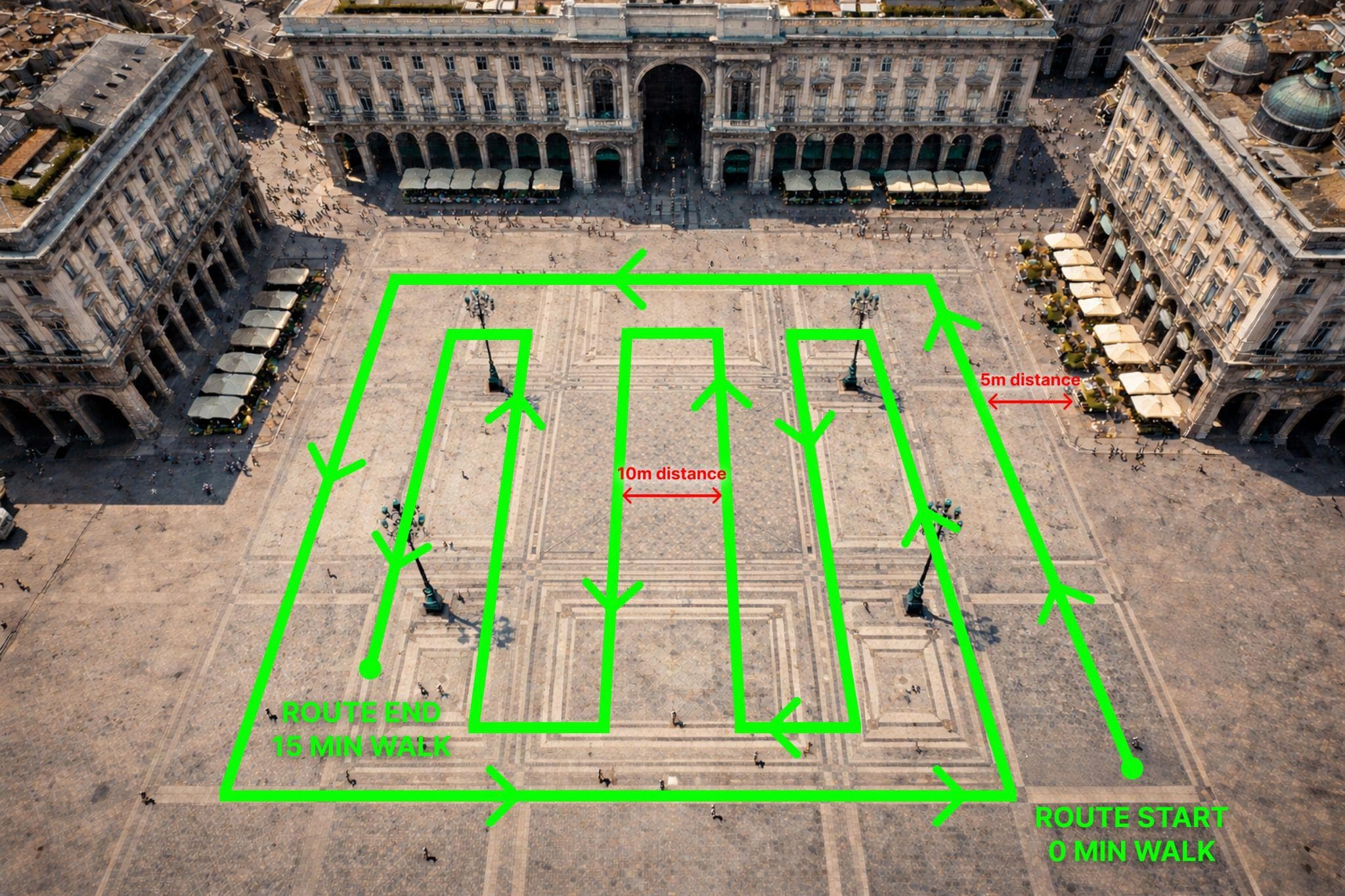
Structured coverage matters. Use overlapping passes, oblique angles, and steady motion to give the reconstruction enough visual evidence.
Drone workflow
Drone use cases
Use orbit-style coverage for structures with vertical faces and details.
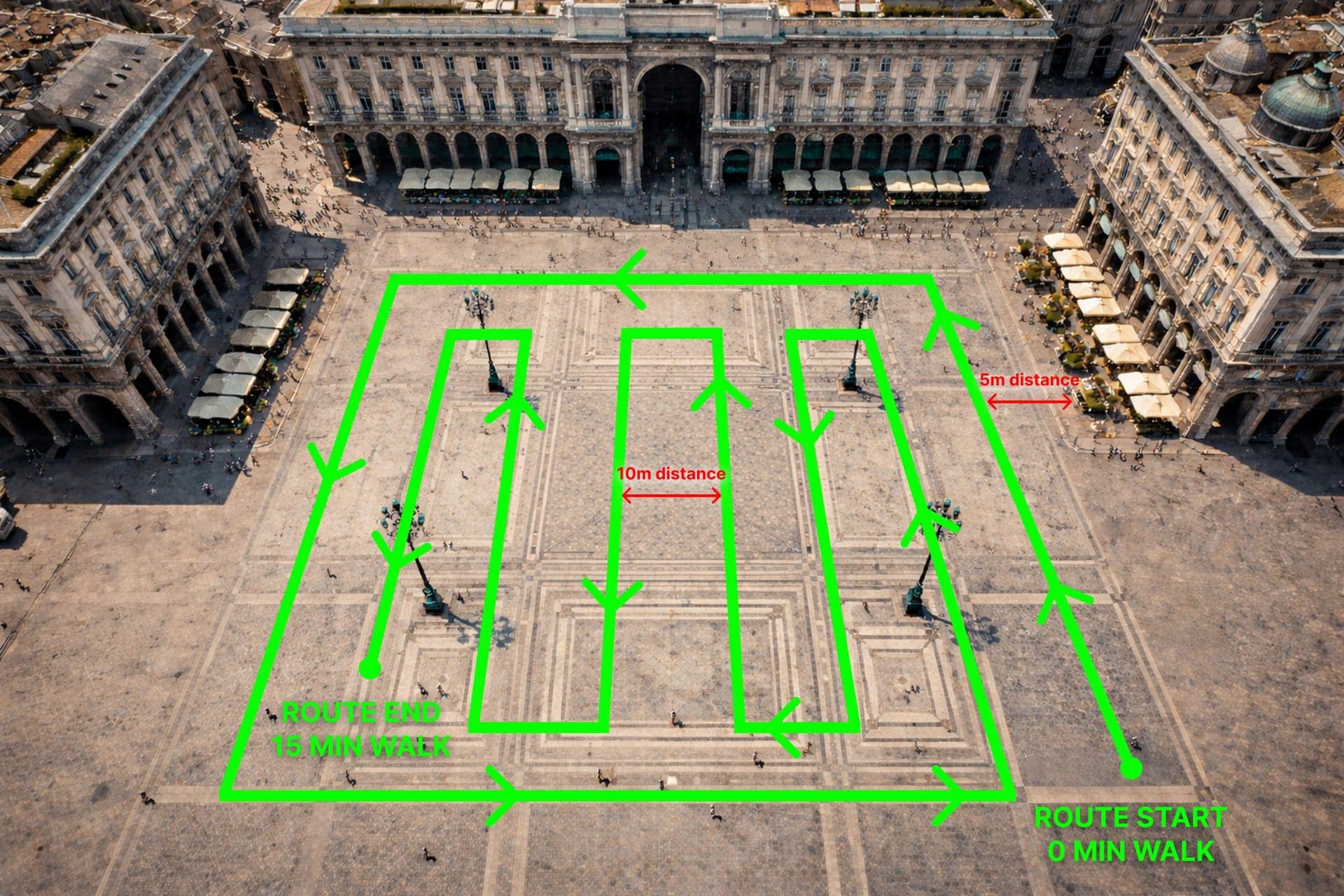
Capture broad environments with grids, perimeter passes, and overlap.
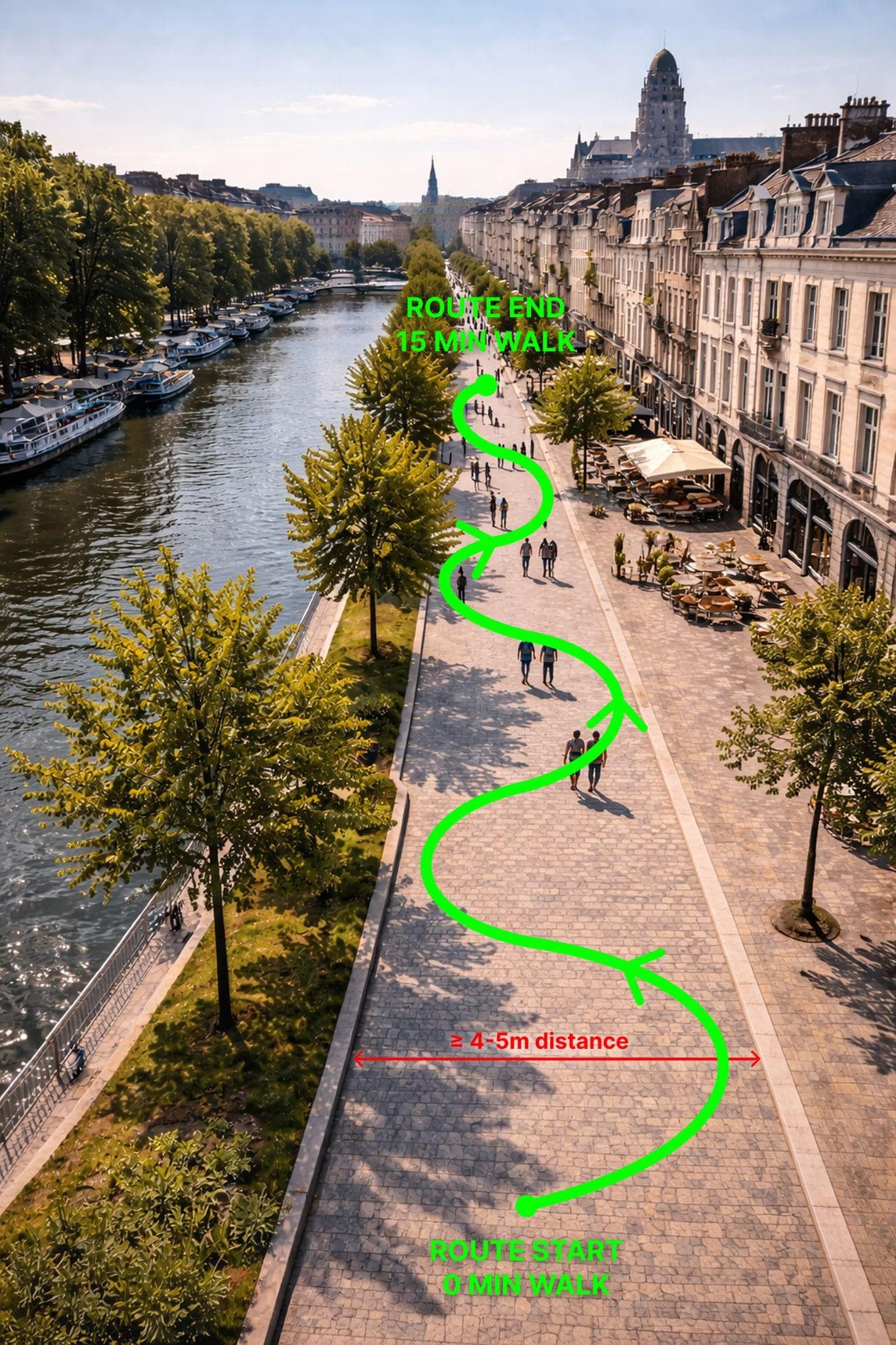
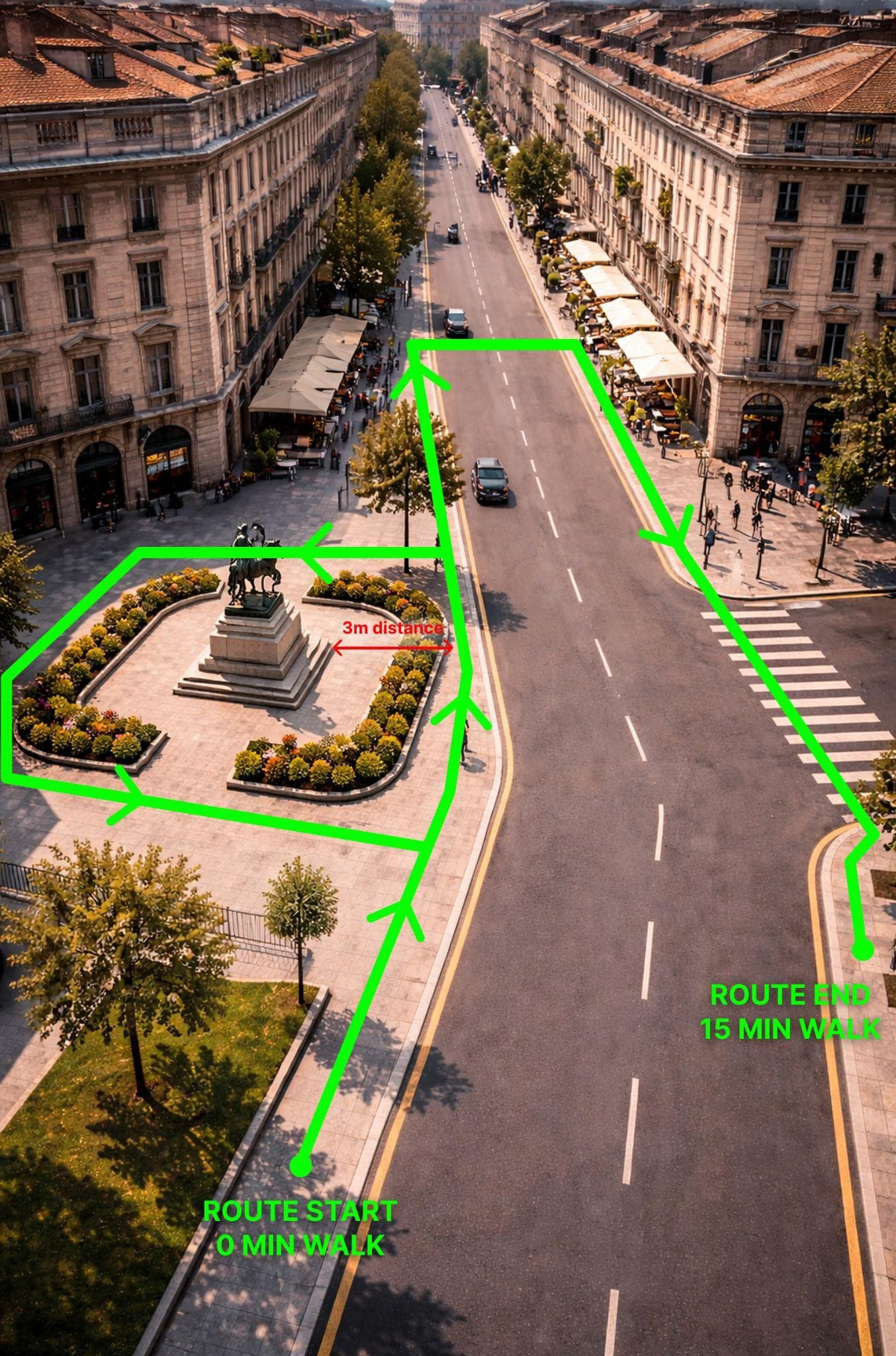
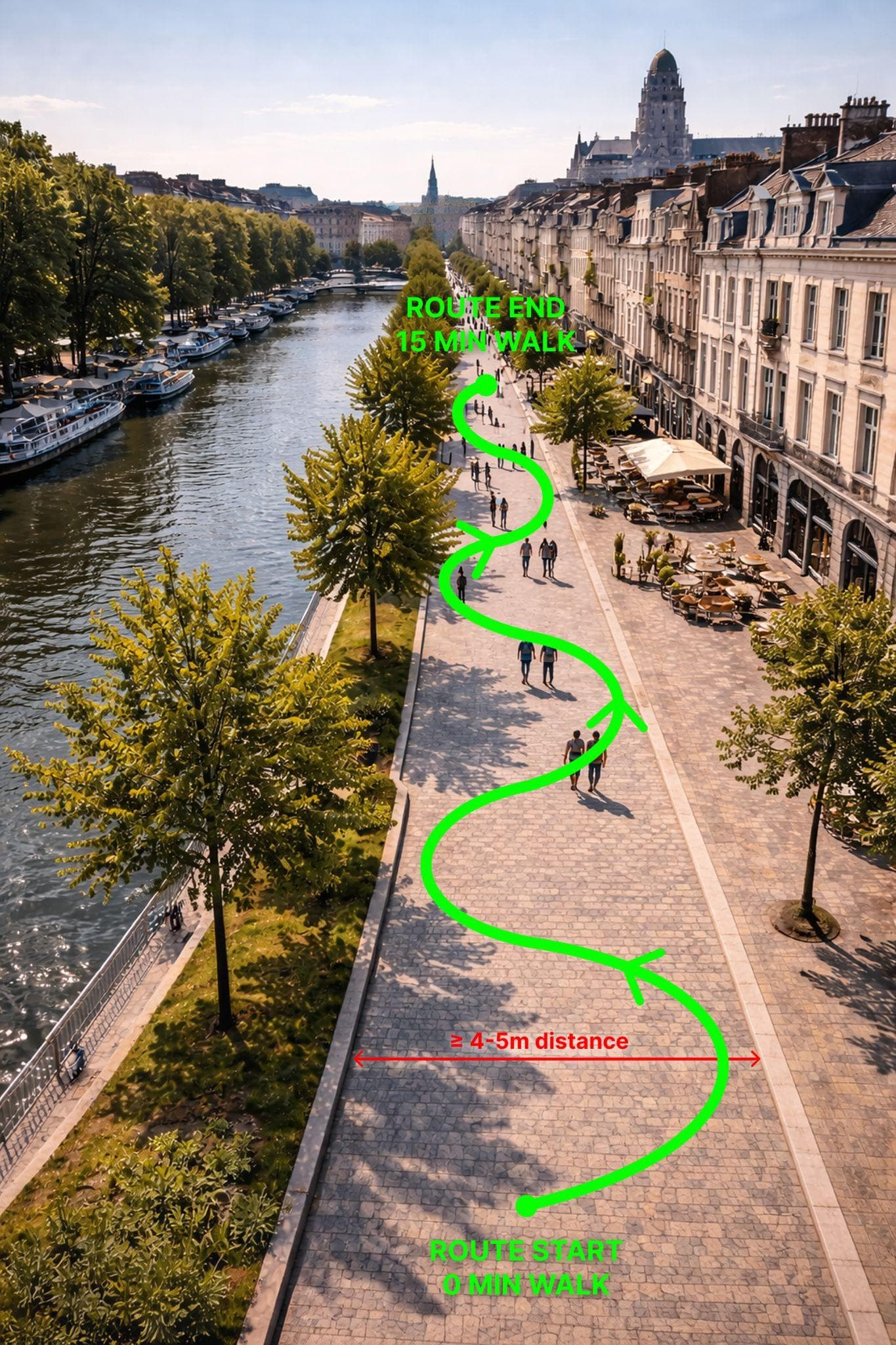
Document walkable outdoor routes, gardens, approaches, and site context.
Drone Gaussian Splatting works best when the source data has steady movement, sufficient overlap, and coverage from multiple angles.
Useful for broad horizontal coverage and open outdoor spaces.
Capture facades and structures from oblique angles.
Recommended for client sites, commercial data, and sensitive locations.
Ready to generate